Signals From A Multipolar Art World is a brand new, ongoing series of profile interviews published by Art Industry Insights with Reena Devi.
Arts journalist and editor Reena Devi goes behind the curtain with arts practitioners and leaders from diverse art scenes, shining a spotlight on the alchemical nature of creative labour.
The interview below is non-commissioned (unpaid) so if you believe in independent journalism that dares to speak from the margins, please support the work.
Running from 10 to 30 October 2025, the second edition of XAOS – International Festival of Experimental Music and Visual Art is currently in full swing in Ulaanbaatar, Mongolia.
This year’s lineup includes four multimedia exhibitions and two live performances, all by 17 artists hailing from 11 countries.
Its curatorial theme is ambitious, to say the least – transformation, the word of the millennia.
The name of the festival, XAOS (written in Greek, meaning chaos), was inspired by the mathematical theory of chaos, which is “how small changes or pivots that are not clearly understood, unclear, and very chaotic can lead to a systematic change at a later stage,” says festival co-founder and leading Mongolian curator, Gantuya Badamgarav (Gana).
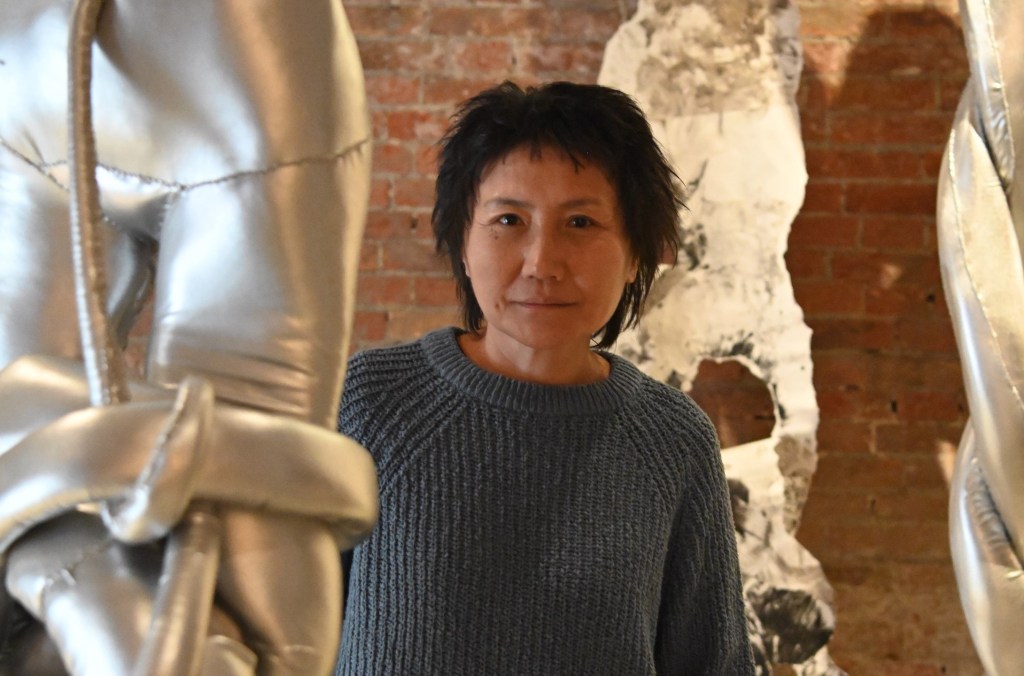
Speaking with Art Industry Insights With Reena Devi, Gana explains,“This is very similar to how experimental non-linear artists impact the mindsets of the whole society, even the whole universe – artists can change the perceptions of people but we don’t expect people to change overnight. It’s very long-term process.”
Gana, who is also Founding Director of Mongolian Contemporary Art Support Association – MCASA, co-founded XAOS with her son, Bilguun Tuvshinbold, Director of the Board, MCASA and an electronic stage director at Playtime, the largest Mongolian music festival.
Art As Transformation
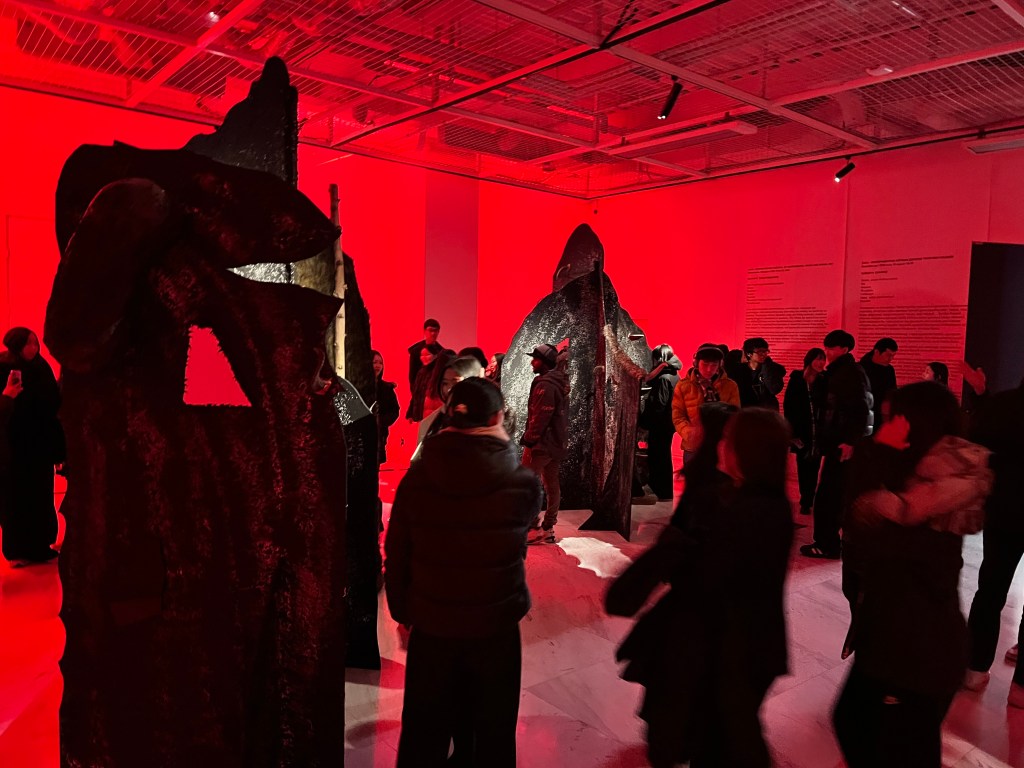
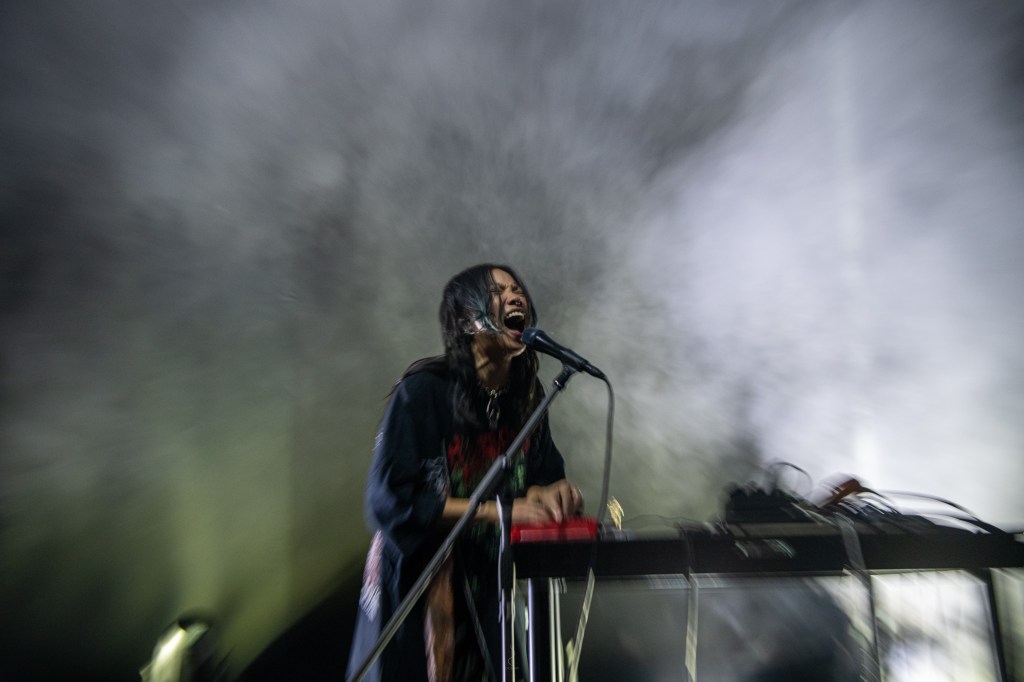
The festival lineup includes one of the world’s most prominent sound artists, Carsten Nicolai aka Alva Noto from Germany, Mongolian artist Jantsankhorol Erdenebayar, Dis Fig, a Berlin-based composer, musician and singer from New York, Lih Qun, a Berlin-based composer, electronic producer, singer, storyteller and musician originally from Australia, Rainy Miller from the United Kingdom, 2K88 from Poland and many more.
Jantsankhorol and Nicolai would be familiar names to many, as they were part of ‘A Temporality’, an interdisciplinary group project at Mongolia’s pavilion at Venice Biennale 2019, when the centuries-old practice of Mongolian throat singing was the main focus of the interactive work.
Right now, audiences attending the festival in Mongolia are experiencing a rare blend of sound, image, movement, and light, finding themselves immersed in a sensorial investigation of identity, spirit, technology, and evolution.
However, the spirit of transformation goes beyond the experimental showcase and its ethos, finding its roots in contemporary social malaise, while seeking self-realisation through art and its breakthrough nature.
At least, that’s how Gana sees it, curates it, and lives it.
Art Versus Loneliness
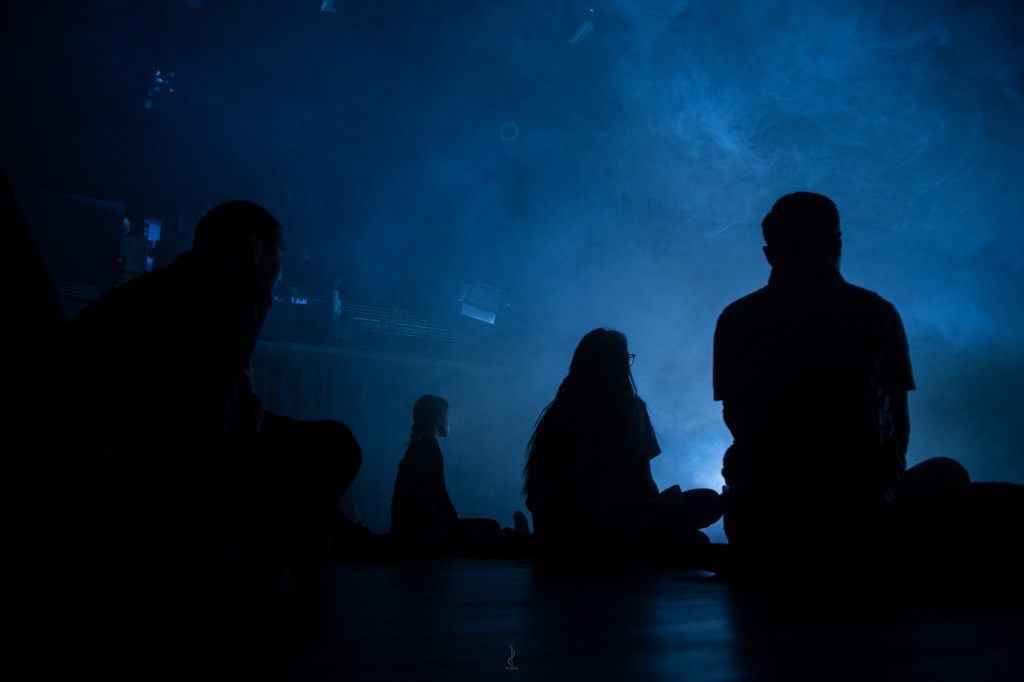
According to the curatorial statement for XOAS: “Transformation is seen as a guiding force that leads us toward the essence of our being, shaping us, influencing our societies, and impacting the environments we inhabit. And it is not merely a phenomenon or process; it is a delicate and lyrical act of becoming.”
To that end, Gana’s and Bilguun’s driving motivation for exploring transformation through music and visual art is the accelerated advancement of Artificial Intelligence and its impact on people’s mindsets.
“In today’s rapidly urbanizing world, loneliness has emerged as a silent epidemic – especially in large cities where people live in increasingly crowded yet emotionally disconnected environments. Here, artificial intelligence is increasingly replacing genuine human connection,” observes Gana.
Among the vastly affected is Gen Z, the most digitally connected generation in history. Raised on social media, they are constantly exposed to curated realities and endless streams of content. “The result? A rise in passive consumption, social comparison, and ‘doom scrolling’ – which often replaces real human connection with digital noise,” she adds.
Art As A Voyage Of Self-Realisation
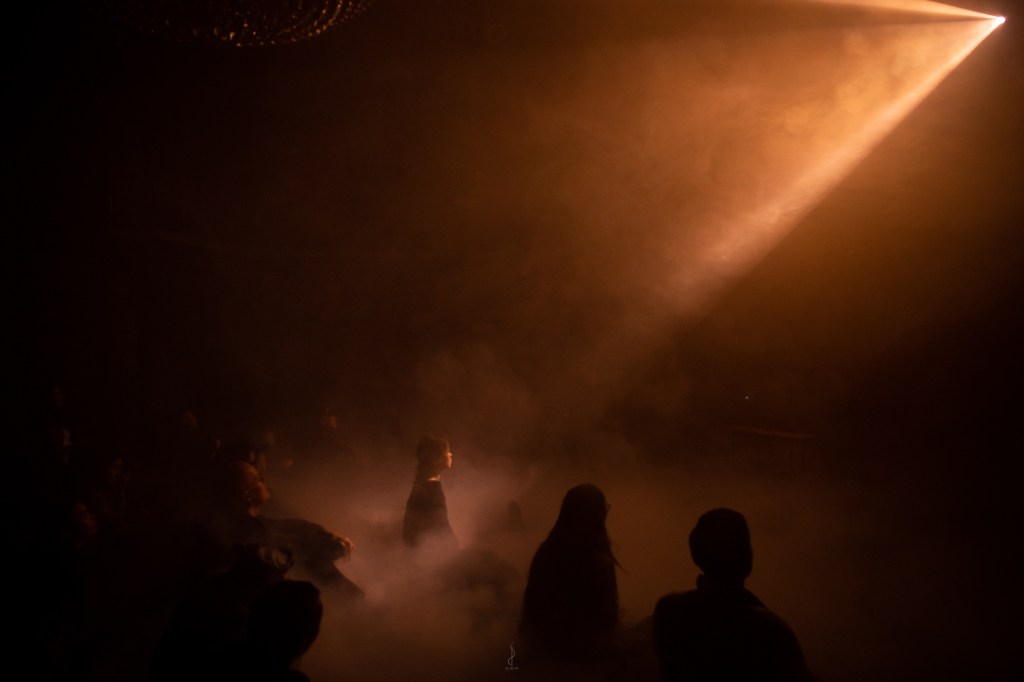
For the visionary Mongolian curator, one of the multidisciplinary exhibitions at XOAS that speaks most strongly to this contemporary social disconnect is ‘Dragonfly – Homeland of the Soul’.
The exhibition is inspired by renowned Mongolian writer and poet Ulziitugs Luvsandorj’s flash fiction, ‘Marriage with Dragonfly’, exploring the journey of a poet who engages in a conversation with a dragonfly about her loneliness and the complex feelings that accompany it.
Throughout their discussion, the dragonfly helps the poet understand and acknowledge the nature of her desires and the accompanying pain, culminating in a moment when the protagonist liberates herself from memories of the past and the people she carries in her heart, moving towards a state of inner awakening.
A co-production by Gana, Berlin-based composer and musician, Lihla, Taipei-based lighting designer, Ray Tseng, and supported by the Goethe Institute, the exhibition creates an immersive experience of sound, poetry, and the mystical, inviting audiences “into a moment where nothing is fixed, yet everything remains possible,” says the curator.
Art Without Safety Net
Despite the expansive vision of the festival, Gana had her own initial doubts due to challenges getting funding from the local government. Over the years, her organisation, MCASA, mostly relied on ad-hoc support from overseas institutions.
However, her son’s passion for bringing visual arts and music together through a rare experimental container for local audiences convinced her: “We have this big passion to present something very special for Mongolian audiences.”
Yet, Gana was right to worry. In the week leading up to the opening of XAOS this fall, several potential funders declined to support the festival. This was not a surprising development— last year, MCASA only received 30 percent of their total funding from the Mongolian government and overseas institutions.
Furthermore, Mongolia is presently facing a period of political instability. Just this week, Mongolia’s current Prime Minister Gombojav Zandanshatar was ousted after four months in office due to an overwhelming vote by local lawmakers.
This comes on the heels of a Mongolian youth movement in June that protested for 21 days, leading to the resignation of a 10-month old coalition government helmed by Prime Minister Oyun-Erdene Luvsannamsrai.
Nonetheless, Gana remains undeterred, no stranger to building cultural infrastructure from the ground.
Art As Acceleration
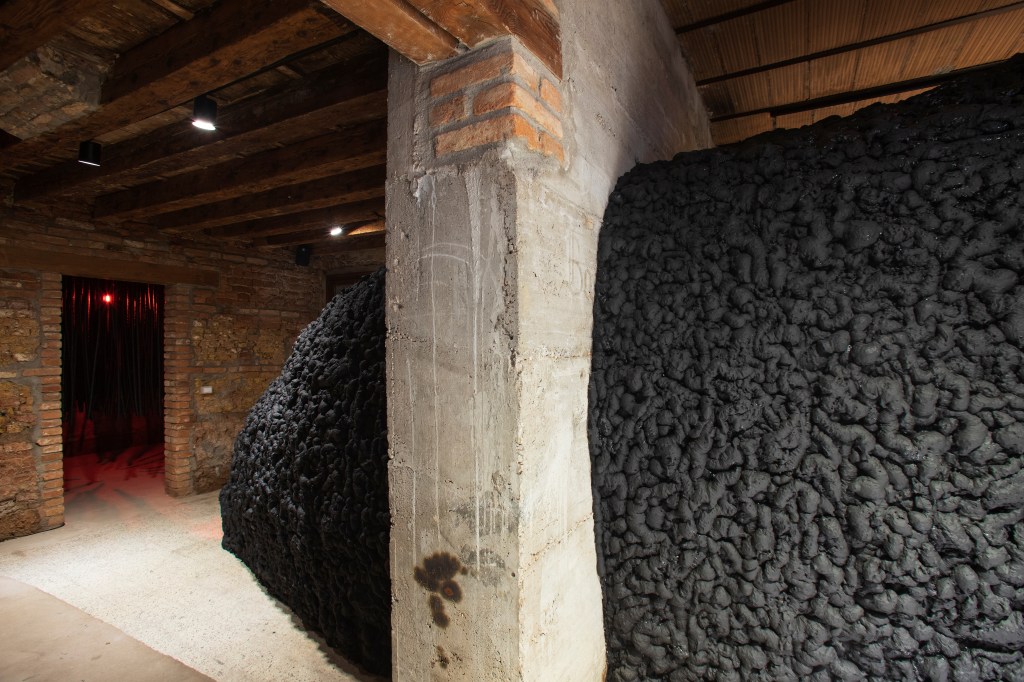
Over the past decade, Mongolia has come to be known globally for its highly esoteric, ecologically conscious, creatively ingenious artists. This is partly due to the launch of its country pavilion in 2015 at the internationally renowned Venice Biennale, the brainchild of Gana.
According to the curator, after their first show in Venice in 2015, people in Mongolia and around the world started talking about Mongolian contemporary art in a very definitive manner. Local and diasporic artists began to exhibit in Germany’s Documenta amongst many internationally renowned cultural platforms.
Prior to Mongolia’s Venice Biennale debut, contemporary art in Mongolia had already been showing signs of growth and experimentation, following a challenging period for artists after the end of the socialist regime in the late 1990s.
Before the emergence of MCASA in 2012, organisations such as Blue Sun Contemporary Art Center and Arts Council of Mongolia contributed to this dynamism. Performance, sound and media arts, site-specific and land art installations became popular practices among local contemporary artists, even though audience appreciation was quite limited.
Gana notes: “In my opinion, at that point in time, Mongolian art scene was very well developed. It really deserved worldwide attention, but none of the artists were presented at a very high level and garnered strong attention.”
“So, the projects we presented in Venice were the voices of not only the artists, but also our country, Mongolia, which is not well known in the world, despite its rich nomadic culture and great history. I really wished to let the world know about modern Mongolia, through its art,” she says.
Yet, after four editions, it made no sense to Gana to keep going because “we always try to bring some change, something very new, something refreshing. If someone takes it over, then we can just change our direction.”
Hence, the birth of XAOS.
Stay tuned for more in this interview series.
This profile interview is non-commissioned (unpaid) so if you believe in independent journalism that dares to speak from the margins, please support the work.
Future interviews in the series may be commissioned (paid) and will be disclosed accordingly. They will not include the Buy Me A Coffee link.

 Art Industry Insights With Reena Devi