In this ad-hoc column published by Art Industry Insights with Reena Devi, arts journalist and editor Reena Devi responds to news headlines with incisive analysis on our art and global systems.
For exclusive updates on Art Industry Insights With Reena Devi, you can become a one-time or regular supporter.
You can also follow the independent media on Substack or Instagram. Commissions, tips, and leads are more than welcome.
The piece below is non-commissioned (unpaid) so please support the work.
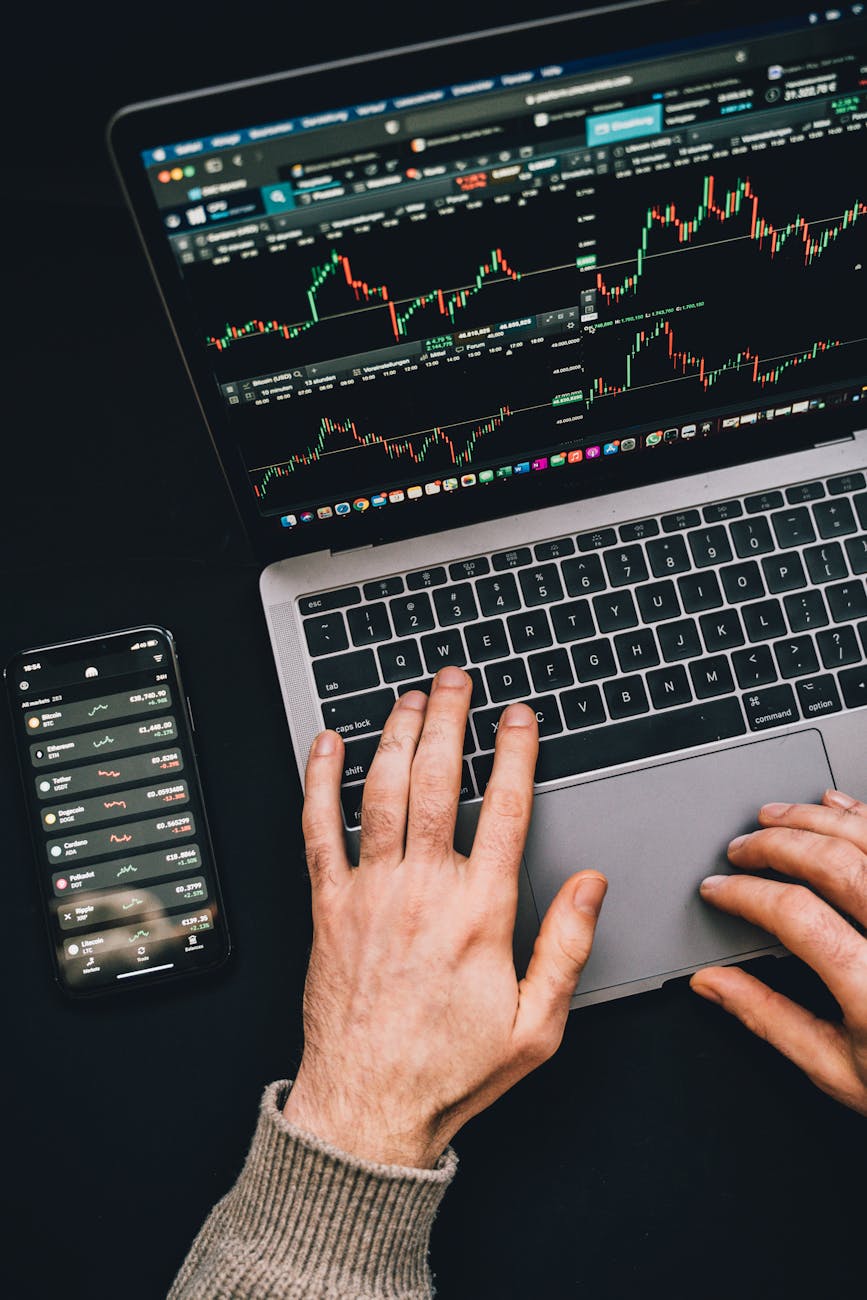
Last weekend, the Guardian reported that “perfectly timed bets” placed on the US-Israel war against Iran, via online betting platforms such as Polymarket, amounted to over $1 billion.
There is growing concern amongst lawmakers regarding possible use of insider information in these transactions.
Alarmingly, data feeds from such prediction apps are being used to create algorithms influencing the oil market, ever since the US-Israel war with Iran ignited a global oil crisis.
Experts predict the outsized influence of online betting platforms on other markets, even news media, is fast becoming the norm.
What does any of this have to do with the art world? How could systems geared towards the creation of art engender or normalise any of the above?
To start, there’s long been an overreliance on insider knowledge within the intensely opaque, heavily unregulated global art market.
This found purchase in the pandemic-induced frenetic market activity led by the speculative culture of the ultra-rich and their aspirants.
Crucially, none of this fiscal vigour would be possible without the art world’s uncanny ability to legitimise corporate power and crisis profits, no matter how ambigious or destructive its origins.
After all, when the world is mired in existential crises, the art market and its related ecosystem tend to benefit in a multitude of ways.
Worse, these benefits extend only to the most powerful and wealthy, no one else.
The Art Market’s Pandemic Boom

In 2020, 10 million jobs were lost across creative industries worldwide due to the pandemic. Meanwhile, the art market, like most luxury sectors at that time, did exceedingly well.
Bored and listless wealthy people, stuck at home during lockdown, were entertaining themselves by outbidding one another in online auctions for luxury items such as watches, sports cards, vintage cars, limited edition shoes, and of course, cryptocurrency and NFTs.
Dubbed the “YOLO economy” or “gamification of money”, the ultra-rich, and those willing to take a little risk with their stimulus money, blurred the boundaries between investment and entertainment. They turned almost every luxury acquisition into a “so-called alternative asset class.”
Their appetites were buoyed by trading platforms like Robinhood, which made it ridiculously easy to buy and sell individual stocks online. In fact, Polymarket, the world’s most popular prediction market app, was launched during the first year Covid hit the world.
Predictably, the art market was raring to go in the early pandemic years, happily bolstering speculative culture, even amongst those who could not afford to do so.
Sotheby’s online auction of the rarest Nike sneakers ever produced and Christie’s record-breaking auction sale of Beeple’s NFT for $69.3 million were some of the myriad offerings by mega corporations of the art industry.
Remember the $1 billion valuation of fintech platform Masterworks in October 2021? It involved fractionalisation of art – buying and selling of blue-chip paintings as fractional investments to individual investors.
This was a very popular trend during this period – feeding into the growing appetites of buyers interested in the tokenization of anything and everything.
Yet, for anyone familiar with the global art market, its fervent activity during the pandemic only seemed like an inevitable next step in the financialisation of art.
How The Art World Normalises Insider Information
It was also becoming increasingly apparent that similarities between the unregulated, opaque art market and equally unregulated fintech markets were starting to dovetail.
Already in 2020, legal experts were comparing the behind-the-scenes manoeuvrings of an art auction – like when the owner of an artwork on the block acts as a remote bidder “to prop up its value” – to someone with their own cryptocurrency exchange orchestrating a large number of Bitcoin trades to “create the impression of liquidity and demand.”
More importantly, use of insider knowledge, like the recent alleged activity on Polymarket and Kalshi, has always been considered business as usual in art investing.
“The well-connected get information earlier than the rest of us, and the uninformed pick up the scraps,” observed Chicago Booth’s Professor of Economics, Canice Prendergast.
As far back as 2005, The Art Newspaper reported that the selection of artists for mid-career museum retrospectives is a “heavily traded-upon piece of market information.” Mainly because such an exhibition “turbo-charges” an artist’s market.
Typically, retrospectives are rarely announced once they have been decided upon, so the period between an exhibition being confirmed and its official announcement tends to benefit a key group – collectors.
“Galleries call their top two or three collectors as soon as they find out and let them in on the deal,” former London-based art dealer, Kenny Schachter, told The Art Newspaper.
It is almost too easy to imagine similar machinations happening behind-the-scenes of some of the well-timed, winning bets placed on Polymarket and its ilk.
How The Art World Legitimises Crisis Profits
Ultimately, profits from any kind of ambiguous financial activity usually require acceptability. This is especially crucial for crisis profits.
Hence, a global network of mega corporations and cultural institutions to help translate profit into prestige.
Saudi Aramco is an obvious example, especially in the context of the Middle East war and its ensuing global oil crisis.
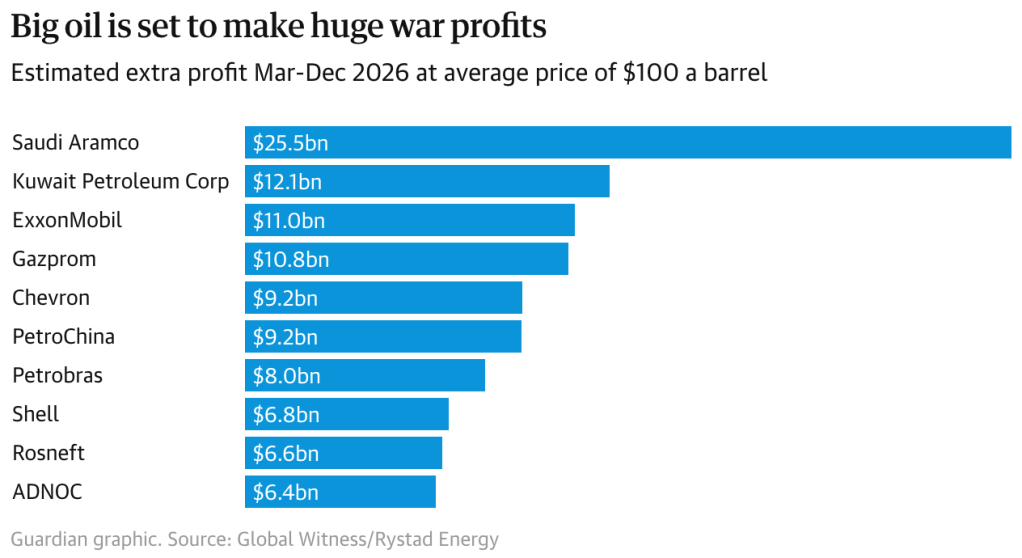
Thanks to rising oil and gas prices created by the war, majority state-owned oil company Aramco is projected to make a profit of $25.5 billion in 2026, if oil prices continue averaging $100 a barrel.
Amongst oil and gas companies which made over $30 million every hour during the first month of the war, Aramco is one of the biggest beneficiaries.
However, profit does not guarantee legitimacy. Cue the art world.
Aramco plays a central role in Saudi Arabia’s cultural expansion, as a patron embedded within the global art system.
Through its media platform AramcoWorld, it commissions established art writers to cover major regional events such as the Diriyah Contemporary Art Biennale, organised by the Diriyah Biennale Foundation.
Aramco also funds Ithra (The King Abdulaziz Center for World Culture), a flagship cultural institution that runs programmes and exhibitions focusing on contemporary art, heritage, and natural history. Ithra even plays a key role in the Islamic Arts Biennale.
By participating in these platforms, internationally renowned curators, artists, museum directors, and media likely gain visibility or access to new markets, while conferring legitimacy on these cultural institutions, and by extension, their funding corporations.
Yet, Aramco is not the exception but the rule when it comes to the global art industry. The capacity to actively normalise corporate power and private wealth is the art world’s most notorious trait.
Does The Art World Know Unlimited Private Wealth Is Pathological?
It is unfortunate, but not surprising, that the proliferation of insider knowledge, speculative culture, and legitimising of crisis profits has deep roots within systems supporting the creation of art.
This has led to the very same systems becoming a haven for the ultra-rich and powerful to exert an extraordinary level of arrogance and cruelty. It is probably why the bulk of working and thriving in the art world involves toadying to the wealthy.
As Gary Greenberg writes in ‘The Book of Woe: The DSM and The Unmaking of Psychiatry’, doctors today diagnose people who fill their homes with newspapers and empty pickle jars with Hoarding Disorder but leave undiagnosed those who amass billions of dollars while other people starve.
Perhaps it is not enough to consider extreme private wealth a moral or fiscal or social failing. Maybe it is time to look at it as a type of psychopathology that plainly requires emergency treatment.
Especially since, trusted public leaders, veteran journalists, legal experts, artists, writers, thinkers, and more, have consistently stated and proven, for decades now, that unlimited private wealth is an existential threat to all.
Stay tuned for more from The News Desk.
For exclusive updates on Art Industry Insights With Reena Devi, you can become a one-time or regular supporter.
You can also follow the independent media on Substack or Instagram. Commissions, tips, and leads are more than welcome.
This article is non-commissioned (unpaid). Future pieces for the column may be commissioned (paid) and will be disclosed accordingly. They will not include a Buy Me A Coffee link.


